OTT vs Theatre 2026: Difference between OTT and Theater?
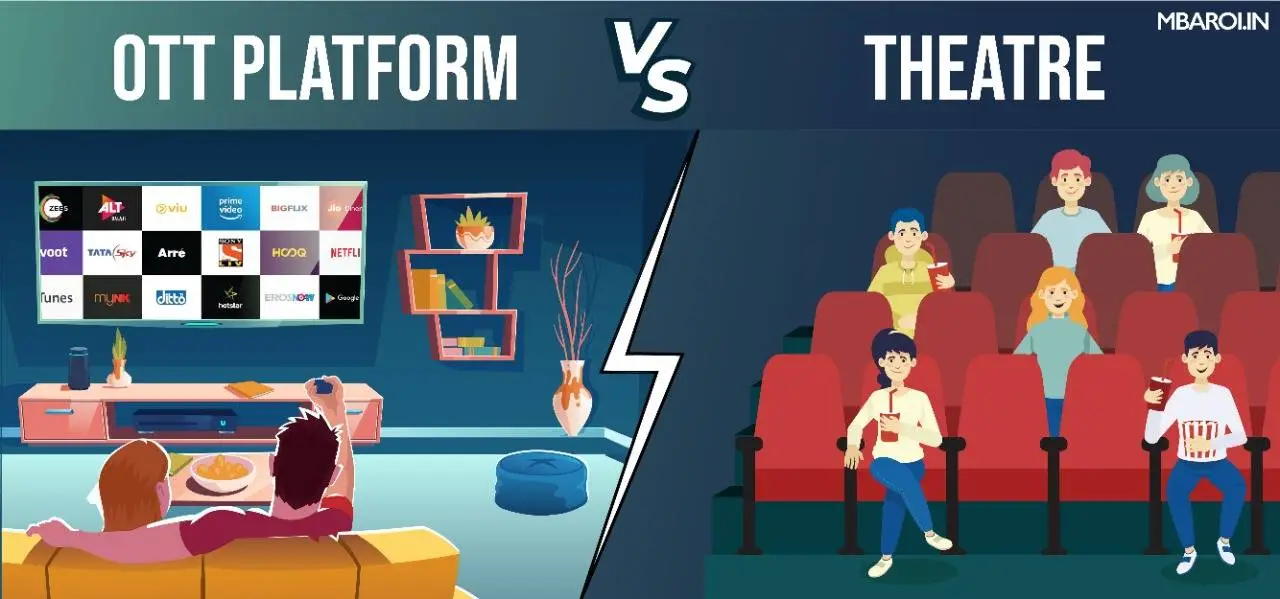
Nowadays, OTT platforms are attracting most internet users. In recent years, the OTT has raised the bar for the entertainment industry and performed extremely well. In the last couple of years, the OTT platform significantly attracted an audience. OTT offers the flexibility to watch and the quality of the content is the key reason why these online platforms impress people. The rapid popularity of online platforms sparks the discussion of OTT vs Theatre. OTT platforms in today's date are the major source of entertainment for people but cinema or Theatre are giants in this industry.
People need the things at their fingertips and OTT offers the same. But that is not the only reason why people start loving the OTT platform. The kind of art and craft cinema presented in recent times is not welcomed by the audience. People do not want the same romantic drama or over-VFX fighting scenes, they want something real. OTT is able to pull off that requirement quite easily. Let us understand the fight of OTT vs Theatre topics in detail.
What Is OTT?
OTT stands for Over the Top" which refers to delivering content using online services. Content creators use the popular streaming channels of the web to serve their work. There are many popular OTT platforms available, some of them are Amazon Prime, Netflix, and YouTube. OTT is not new. We have been using them for more than a decade now but the rise of the smartphone industry helps this industry witness a great amount of user attraction. Not only in video streaming some audio streaming platforms like Saavan, and Spotify have also performed better in the last couple of years.
See - Top Tier 1 MBA Colleges in India 2026: Fees, Placements | Top 50 MBA Colleges in India
Facts of OTT and Theatre:
- In 2026, 601+ million active users are on OTT Platforms.
- As per Statista, the revenue of the Indian OTT video market is likely to touch 4.09 Billion US Dollars.
- Online gaming saw a growth of 22% from the last year.
- It is expected that in 2027, the Indian Digital Media Market will touch the 13.31 Billion US Dollars market with a growth rate of 9.74%.
- Netflix and Amazon Prime are the biggest OTT platforms in India with 20% of users each. Followed by Disney+Hotstar with 17%, Zee5 with 9%, Jio Cinema with 7%, Sonyliv with 4% and 23% among other various platforms.
- In 2026 around 100 million paid subscribers and 450-500 million active users.
- The Indian theatre market will touch 5+ Billion US Dollars in 2026 and with an annual growth rate of 5.5%, it is expected to touch 7 Billion US dollars in 2029.
- The Indian film industry is the biggest entertainment industry in the world.
- India has 9382 cinema screens and all the movie industries in India release 1500+ movies every year
Check This: UPI Revolution in India: From Cash to QR Codes & Digital Payments
Why Are Audiences Choosing OTT ?
- Affordable:
Ott platforms are cheaper than the theatre. The average cost of a monthly subscription to the OTT platform is around 149 to 199 in India. Where the cost of a single ticket in multiplex starts from 249/- in small cities. So people found it more cost-effective and beneficial.
- Variety of Content: Content is the king and that is the universal truth. In the past few years, OTT has pulled off content that is relatable, extreme, and entertaining. On the other hand, Bollywood is still making the same kind of old movies or bad copies of original content.
- Convenience: OTT gives the flexibility to watch the content at any time from anywhere. It has the advantage of the time duration. Working professionals who do not have time for watching movies or shows. They favour it because they can watch the content at any time.
- Thrilling Experience: Attention spans time, after the introduction of social media people need something interesting every minute and if they fail to find it they feel bored. OTT gives a thrill to the audience and they feel interested throughout the show.
- Flexible Viewing: These platforms provide the convenience of watching if someone feeling bored in a particular scene they can skip it. In the theatre that is not possible and most of the time people are irritated by this.
Also Check: - Group Discussion | Types of Group Discussion
But Is Theatre Losing Its Charm?
There is a rapid growth of OTT but theatres are nowhere close from disappearing. In fact it was observed that in 2025 that India’s theatrical market has delivered a strong performance. According to ORMAX Media, In 2025 the Indian box office generated approx. ₹13,395 crore which means its the highest grossing year ever recorded at the Indian box office.
It was observed that in Jan-June 2026, the momentum still continued from the previous year. Approximately ₹6,398 crore was generated at the Indian box office.
According to these figures it still proves that people do enjoy going to the theatres for the right theatrical releases.
Why Theatre is a Better Option than the OTT?
- In 2026, films across Hindi, Tamil, and Telugu cinema (like Dhurandhar, Border 2, Project Hail Mary) have shown a strong theatrical revival — proving big-screen releases still draw massive audiences even in the OTT era.
- Theatre gives you a different and immersive experience which can not be possible on the OTT. A big screen, amazing sound quality, and an atmosphere that only you can feel in the theatre.
- The theatre has a regulating authority censor board that is there to check whether the content of the movie is watchable or not. If not then they cut the offensive scenes. On the other side, OTT content creators use abusive language, and nudity, and glorify the crime that can hurt the sentiments of others. Like last year the web series Tandav faces criticism for its content related to lord shiva.
- 3d and 5d movies are the future of entertainment and enjoying them at home is not that much interesting. And that will always be the plus point for cinemas in the Theatre vs OTT fight.
- Theatre is giving employment opportunities to many people who are skilled or unskilled. So going to the theatre indirectly helps them in earning the money for their living.
- It allows you to experience the movies with strange people and gives you a sense of joy.
- 7. The theatre's box-office is showing double-digit growth in 2026 (21% YoY per Multiplex Association of India), proving the "communal cinema experience" still holds strong appeal despite OTT's rise.
Read About: CMAT Exam 2026 | List of All IIM Placement: Average & Highest Package 2026
OTT vs Theatre: The Key Differences
| Factor | OTT | Theatre |
| Convenience | Watch anytime, anywhere | Fixed show timings |
| Cost | Subscription-based and multiple pricing options | Ticket + travel + food expenses |
| Content Variety | Extremely broad | Primarily theatrical releases |
| Experience | Personalized and comfortable | Immersive and communal |
| Screen Size | Smartphone, laptop or TV | Large cinema screen |
| Social Experience | Mostly individual/family viewing | Strong communal experience |
| Content Availability | Extensive catalogue | Limited theatrical window |
| Flexibility | High | Relatively low |
| Best Suited For | Series, casual viewing, diverse content | Event films and cinematic spectacles |
The Changing Movie Release Model:
The relationship between the theatres and OTT is changing in the entertainment industry. It is becoming less about the competition and more about sequencing.There might be a theatrical release of a movie first but later on it becomes available on the OTT platforms.
This creates opportunities for both the platforms. For example, Theatre generates:
→ Excitement
→ Box-office revenue
→ Publicity
→ The Event experience
Similarly OTT extends the lifespan of a movie and helps to reach the audiences who did not get the chance to watch it in the theatres.
But there can be a competition among the streaming platforms for post-theatrical content. According to ORMAX data it is reported that Netflix has 36% share of the post-theatrical movie rights market, followed by Jiohotsar at 21%, Prime Video at 18% and Zee5 at 13%.
Check: Top Indian CEOs in the World 2026
Conclusion: OTT or Theatre
Both are a platform where artists deliver their content and perform to entertain the audience. In 2026, the trend has shifted from "OTT killing theatres" to coexistence — OTT dominates daily/on-demand entertainment while theatres are seeing a strong box-office revival driven by blockbuster franchise films and regional cinema. Yes in recent times OTT dominated the entertainment industry but it happened with all industries during the time of Covid when digital platforms took over traditional platforms. Yes, that is also the fact that cinema failed to deliver quality content and OTT kept on doing this. But now when some movies deliver that content we have seen that they receive love from the audience. Also, the Theatre industry is quite big and the OTT platform needs to do a lot of work to reach there. Online streaming platforms are required to deliver amazing content if they want to win OTT vs Theatre competition.
In the discussion of OTT against the theatre or vice versa, the best content-serving platform will win the race. Right now OTT is delivering that quite beautifully but some content creators are promoting violence and nudity which will not be acceptable to a large audience. If movies can cater to the audience's preferences well then people will choose them also. So what to choose between them is a subjective choice because everyone has different tastes.
Read More:
Frequently Asked Questions
Q1. What is OTT?
Ans. OTT (Over-the-Top) delivers movies, shows and other content through online streaming platforms.
Q2. Is OTT better than theatre?
Ans. OTT offers convenience and variety, while theatres provide a more immersive and social viewing experience.
Q3. What is the main difference between OTT and theatre?
Ans. OTT allows flexible, on-demand viewing, while theatres offer fixed shows and a large-screen cinematic experience.