Impact of Social Media on Youth: Positive and Negative Effects
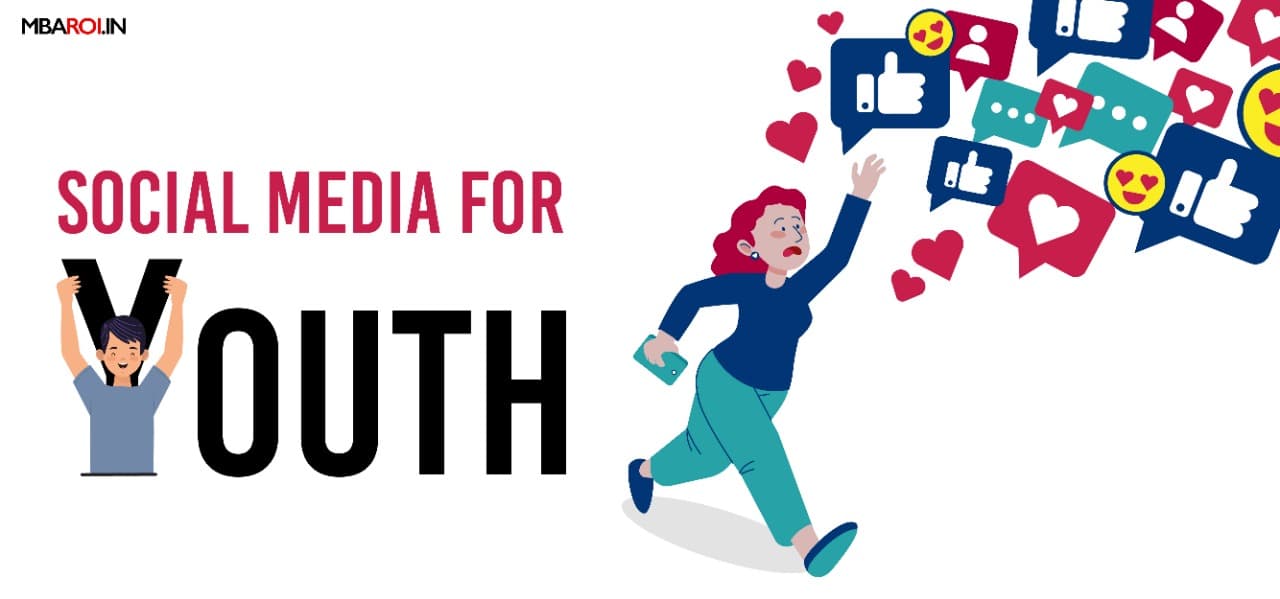
Impact of Social Media on Youth Speech or GD Topic
Social media impacts youth by improving communication, learning opportunities, and career growth while also creating challenges such as addiction, cyberbullying, anxiety, and privacy concerns.
Social media is like two sides of a coin. On one side it connects people worldwide and allows interaction and exchange of ideas/knowledge; on the other side, it may promote deceptive posts, messages, conflicts, cyberbullying, and mental and physical health issues. The intention behind the development of social media channels was to facilitate communication, and the youth have been the early enthusiasts of this digital media. High levels of engagement have however been a matter of concern for their wellbeing too. Nonetheless, social media is a major lifeline in our lives today and is an inevitable part of everyone’s life, whether it is official or personal space.
As of April 2026, global social media usage stands at around 5.79 billion user identities — roughly 70% of the world's population — up from 5.5 billion in 2024, according to DataReportal. Average daily usage globally is about 2 hours 21 minutes. Facebook, WhatsApp, Instagram, and YouTube remain the most-used platforms among young people, with Facebook at roughly 3.1 billion monthly active users, WhatsApp and Instagram close to 3.0 billion each, and YouTube around 2.5 billion.
Social Media Usage: 2026 Snapshot
- Global social media users: 5.79 billion identities (≈70% of world population), as of April 2026 (DataReportal)
- Average daily usage: 2 hours 21 minutes per day, globally
- Gen Z daily usage: Around 3.2 hours per day — the highest of any age group
- Facebook: ~3.1 billion monthly active users
- YouTube: ~2.5 billion monthly active users
- WhatsApp: ~3.0 billion monthly active users
- Instagram: ~3.0 billion monthly active users
- Platforms used per user: Around 6.7 platforms per month on average
- India's social media users: Over 500 million, with India now the largest single-country user base for platforms like Instagram and WhatsApp (DataReportal, 2026)
Growth in total users has slowed compared to the pandemic-era boom, but daily engagement — especially among Gen Z — remains high, and users are spreading their attention across more platforms rather than dramatically increasing total screen time.
Also Read: OTT vs Theatre | Preparing for Business Growth and Survival in the Current Crisis
Social Media and Youth in India: An In-depth Perspective (2026)
India is currently home to the world's biggest youth audience on social media; youth account for about three-quarters of India's social media users. The average daily social media usage time among Indian users is just short of 3 hours, which is higher than the average global number of hours. Instagram, YouTube, and WhatsApp are currently the most popular among the under-25s.
This trend has shifted the discussion from 'usage' to 'regulation'. As part of the period up to 2025–26, the authorities in India have actively considered the issue of age verification and minimum age regulations for social media use, citing the problem of digital addiction among school-going children both as an economic issue and health issue, in addition to government statistics showing that the vast majority of teenagers use smartphones for social media use and not education.
Positive Impacts of Social Media on Youth
- Social media has empowering effects on teachers and students. Teachers can collaborate and exchange views with one another. Students get easy access to various study materials, perspectives, and worldviews and can also discuss different topics and assignments.
- Today’s youth relies much on social media for current affairs and news. Most of the breaking news today spreads faster online, informing and empowering individuals. It increases awareness even among the masses because the internet proliferates faster.
- It allows people to communicate with friends and stay connected. Many of today’s teens and working people agree that online communication builds and fortifies relationships for social benefit.
- Social media space is a great marketing opportunity for professionals to resent themselves, connect professionally, and find job and business opportunities. It works both ways by bringing together the unemployed and the recruiters together via LinkedIn, Facebook, Twitter, etc. Not only for professionals, social media in recent times has become the new marketplace for buyers and sellers. It helps businesses in Selling during Covid 19 when everything in the world was paused.
- They find communities to support their hobbies and for specific talents. They can share their art, explore, and express themselves. This helps them to cultivate a constructive digital imprint for a good portfolio. Every youth today, aspires to be a “Startup Founder” and networking is their priority for success. Social media has helped many founders in a substantial way to build these relationships.
Read Also:Trending gd-topics | Six ways to improve your critical thinking
Negative Impacts of Social Media
- Teenagers face Cyberbullying that earlier existed in the form of trolling on forums, and chat rooms, sharing inappropriate photos, spreading rumors online, and more. This gets even more serious when the bullies provoke people to commit suicide, commit crimes, or when people fall prey to terrorist activities, etc. Social media can be used as a tool to spread hatred, and tarnish the reputations of brands and individuals which is unethical.
- One fatal effect of social media is addiction. Youth get used to it and start using it timelessly irrespective of the pending works piled up with them. This may even lead to improper sleep, mental stress, killing time and other health issues. These all are harmful psychological effects of social media on youth.
- Cases of people losing jobs, being unproductive at work cause a lot of social disturbance and hinders the development of youth. Small children and even teens prefer to sit at home spending time on the internet instead of going out to play with other kids also takes a toll on their psychological health.
- Privacy is a concern when using social media platforms, as the personal data of users is not safe. The lapse on part of the giants like Facebook that led to a major data leak that detailed the phone numbers of its 419 million users will be stuck back in the memories of internet users for long. Sharing personal photos and information on social networks gives rise to its misuse and abuse. That's why the Ban on Chinese Apps in India has impose by the government.
- The casual relationships formed on social media may seem real but actually, the meaningful relationships are nurtured and fostered in the real world. In reality, these kinds of relationships formed on social media builds isolation and depression. The damage it brings to offline relationships is not measurable. This is pertinent to well-being, particularly in terms of face-to-face interactions, idealized images, sleep patterns etc.
Social Media and Youth Mental Health
Many researchers have found that spending too much time on social media can increase anxiety and depression, especially among young people. According to the American Psychological Association, using social media for long hours can affect mental health, especially if it reduces sleep, exercise, or time spent with family and friends. Also, endlessly scrolling through posts and comparing yourself to others is more harmful than using social media to learn, connect, or communicate with people.
Conclusion
In nutshell, social media is a significant part of our lives today. The youth must be able to use their time productively to improve their lives and not squander their valuable time. To be on social media is not a choice today, youth need to decide how to utilize it to the best of their advantage. In 2026, around 5.79 billion people use social media worldwide, compared to about 2.86 billion in 2017. This shows how quickly social media has grown and become a part of everyday life.
Therefore, it can be ascertained from the above, that advantages of the social media outweigh its disadvantages. For the youth, seminars, audio-visual tools, group discussions, and online reading materials play essential roles in shaping their personalities. Social media is a possible amplifier of both risks and paybacks, so the youth must actively and profitably involve themselves in this online ecosystem.
Read more:
Frequently Asked Questions
Q1. Impact of Social Media on Youth
Ans: Social media impacts young people in both positive and negative ways by influencing education, communication, mental health, and social relationships.
Q2. What are the positive effects of social media on youth?
Ans. Social media helps youth gain knowledge, connect with people, develop skills, and explore career opportunities.
Q3. What are the negative effects of social media on youth?
Ans. Excessive social media use can lead to addiction, anxiety, cyberbullying, sleep problems, and reduced productivity.
Q4. How does social media affect students?
Ans. Social media can support learning and collaboration, but excessive use may distract students from academics.
Q5. How can youth use social media responsibly?
Ans. Youth can use social media responsibly by limiting screen time, verifying information, protecting privacy, and focusing on productive content.